Tag: #PhDlife

  • Rewritten: PhD Propositions

    Man. What a beast of a thing this turns out to be.

    For context; people wishing to pursue a postgraduate qualification by full dissertation (Master or Doctorate) are expected to present and defend a project proposal early on, if not at the start of their studies. At PhD level, this proposal has to convince your university that a) you are well versed in the extant literature in your field; b) a knowledge gap has been identified in the literature; c) you have come up with a workable research design to add a unique knowledge contribution to address the identified knowledge gap. [This is not an extensive definition/description.] This proposal allows young academics continuing straight from their previous qualifications to discover and develop their understanding of their fields. Similarly, the process helps ‘older’ academics returning from industry or other journeys in life to find their footing. It is especially helpful to ground yourself if you’re coming into the PhD with a strong idea of what you want to ‘prove’ – not because the proposal will confirm everything you thought, but because the process will force you to reconsider your assumptions and expectations in light of existing work.

    Personally, the process of researching and writing my PhD proposal was exhilarating and fun. I enjoyed exploring different avenues of research and discovering scholars doing really cool work. I also had a lot of fun learning about methodologies I never knew existed. It is fun to pick up threads from different conversations in the literature, weave them together, and see what comes out on the other end. The process of developing a proposal helped me define a research project that is exciting, challenging, and meaningful.

    Defending the research proposal is a process intended to help you by getting fresh eyes on your thinking. Experienced academics engage with your written proposal, and then meet with you and your supervisor to hash things out. The Yin of this engagement is a meeting of minds working together to ensure that the project you are going to commit a number of years to, is something that has a good chance of being worthwhile. The Yang of this whole spiel is the workplace politicking and flexing amongst peers who may – as per the Reviewer 2 memes – use the opportunity to very bluntly not be helpful. As you may be able to tell, my experience was… balanced.

    I enjoyed presenting my proposal to the faculty committee, and appreciated the helpful questions and feedback that came from the defence discussion. I did not expect that an objection to my proposal would be that I seemed to be “too sure that the study would work”. Please note, not that my hypothesis would prove to be correct – but that the study design would be serviceable. (I thought that was the point of developing the proposal.) The other surprise was that my decidedly no-tech proposal elicited the critique that “the roll of technology in the intervention was not described”.

    I mean… yes?

    It’s been a month since I’ve submitted the revisions. The quiet is maddening.

  • The cost and benefit of time

    There is something to be said for the fervour and energy to continue with your postgraduate career while you’re in the thick of it. Much of it, for me, can be attributed to the high of a successful run. Finishing off my PGCE on a high note energised me to move directly into a B.Ed Honnours programme in stead of going back to teaching in Taiwan (my original idea). Similarly, discovering that I’m relatively good at academic research, and wrapping up the B.Ed (Hons) with greater success than the PGCE had me flying into an M.Ed (by full dissertation) with great excitement. While that particular journey had its fair share of ups-and-downs, the string of successes leading up to it filled my tank enough to carry me through. Success is addictive.

    So why did I take a break from the heady marathon of academic meritocracy? After all, I was doing so well!

    The honest answer? I ran out of funds. My academic record was of a sufficient standard to qualify for a PhD scholarship – but I discovered that I was now “too old” to even apply. Having only survived on short-term teaching contracts (at student rates) over the last 4 years, I didn’t exactly have the kind of savings to cover the study-fees at any of my local universities. Student loans were also out of the question, for the same reason. The last nail in the coffin was being told that I was now overqualified for further short-term lecturing contracts, unless I was willing to continue working at student rates (which wouldn’t cover all the associated expenses of continuing with my studies). So that was that.

    Not diving directly into a PhD turned out to be a very smart move!

    Not only did I manage to find a pretty good job at a Higher Education Institution in the city, but my alma mater offered me a second-semester contract at junior lecturer rates. I was lucky enough to be able to work in different disciplines, whilst earning a modest living, and gaining valuable exposure, learning opportunities and insights along the way. Advancement at the HEI was also not to be sneered at, and I finally secured a full time position as Head of Academics there in 2020!

    Teaching Academic Scholarship on April Fool’s Day (2018)

    2020… yeah, that was a year. The global pandemic meant that it was probably the worst year to start as an AH of a full-contact campus, but we didn’t know that in January. What a ride that was! The so-called ‘online pivot’ was more like tipping/rolling a tractor in a muddy field, but we somehow made it work. Until, that is, burnout landed me in a clinic. Yeah, that was a year.

    I stepped back and worked online for a different HEI in 2021, which had offered me a one-year contract to help them ‘pivot’. Assisting was a good way to keep my thinking academic, and I managed to save enough to apply for a PhD-programme towards the end of that year. The circle had run its course.

    The cost of taking time out, as it were, was unpredictable and no laughing matter (to say the least).
    The benefit, however, is a far more realistic and nuanced perspective on the goings-on in Education.

    Had I jumped into the PhD directly after my Master’s degree, I would have attempted something way more idillic and naive as a contribution to the world’s knowledge. While that would have been fun, at points, I don’t think it would have been as fruitful as what I have in mind now.

    Perspective at the cost of getting it done faster?
    Worth it.

  • Hello again, for the first time?

    Hello out there, whomever you are, and welcome. While I have a rather sketchy record of blogging (despite doing a Master’s degree by full thesis about its potential for teaching and learning), I’ve decided that I should try again. This time, the purpose is for me to keep a journal of my PhD journey. A think-aloud-protocol on #PhDlife. Perchance a reader might stop by and add their pennies to the kitty, or offer me an African inheritance?

    I’m Willie Knoetze, and this is me playing at Academics.

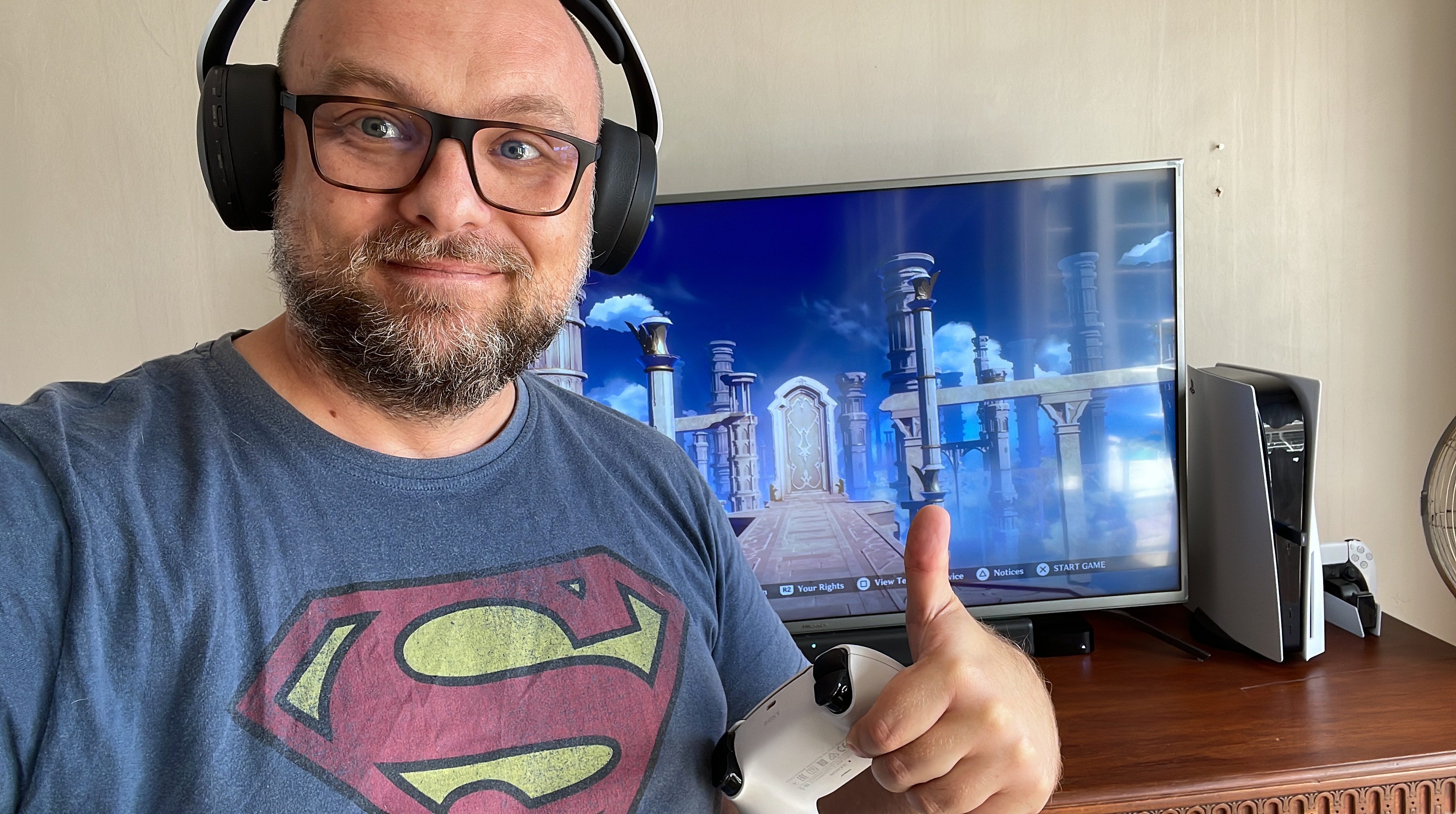
    Photo of myself waiting to play Genshin Impact on the PlayStation Network (2022).
  • Preface

    Who am I? Why am I here? These are two questions that have featured in my life more often than I care to admit. The truth is that I have grappled with these questions for the longest time. First as a pre-teen gradually becoming aware of more and more nuances to the “Who am I?” riddle, followed by my teenage awakenings of (what seemed to be) fundamental shifts in reality and the (many) ensuing existential crises. For the longest while, I only ever felt safe and at home when wrapped in the embraces of stories (told by my dad), music (played by my mom on the piano) or when flying on the wings of fantasy.

    As I recall, the first place outside the sanctuary of the home my parents created, was in my reading class. Learning to read was what taught me how to relate to the strange new worlds that kept unfolding in and around me. Pages upon pages upon volumes of stories, reports and explanations drew me ever closer to some idea of who I was and how I fit into the many pictures that life painted around me. There was magic in reading, and it lifted me into the gentlest of lights.

    But there was also a darkness that came with learning. The darkness of knowing. Knowing that the world was not the place of acceptance I had grown accustomed to in the embrace of my family. Knowing that cruelty was an ever threatening glint in the eyes of the people around me. Knowing that who I thought I was, and who I suspected I might become, was wicked and unwanted in the world. As I grew, the world crept into my home – and I feared that I would soon be discovered to be wicked and unwanted in my family…

    This is where some of my teachers came to my rescue, while others were unwittingly tightening the noose around my soul. In stead of drumming the facts of what was good and what was bad into our skulls, some teachers lifted the roof of the world to show us what might be. I will forever be thankful to the teachers who asked me to look beyond the sentences of a two-dimensional world, and to consider the endless aspects of a single thought.

    It is because of these gentle souls, and the unwavering love of my parents, that I have survived growing up. And it is because of these custodians of peace that I have found my place in the world, and that I am finally embracing my destiny – as a #wreckademic in Education.

    I came up with the idea of being a #wreckademic partly as a throwback to the “academic wreck” label slapped on me in high school; partly as an intent to wreck the ruts that education has fallen into by wielding left-field scholarship as a rust-solvent for thinking about learning. It’s a bit of a self-gratuitous way of signalling that I hope to be of use in the real world. Maybe with a hint of delusions of grandeur? It’s aspirational in spirit, though, without claiming to live up to the hype of Disruption.

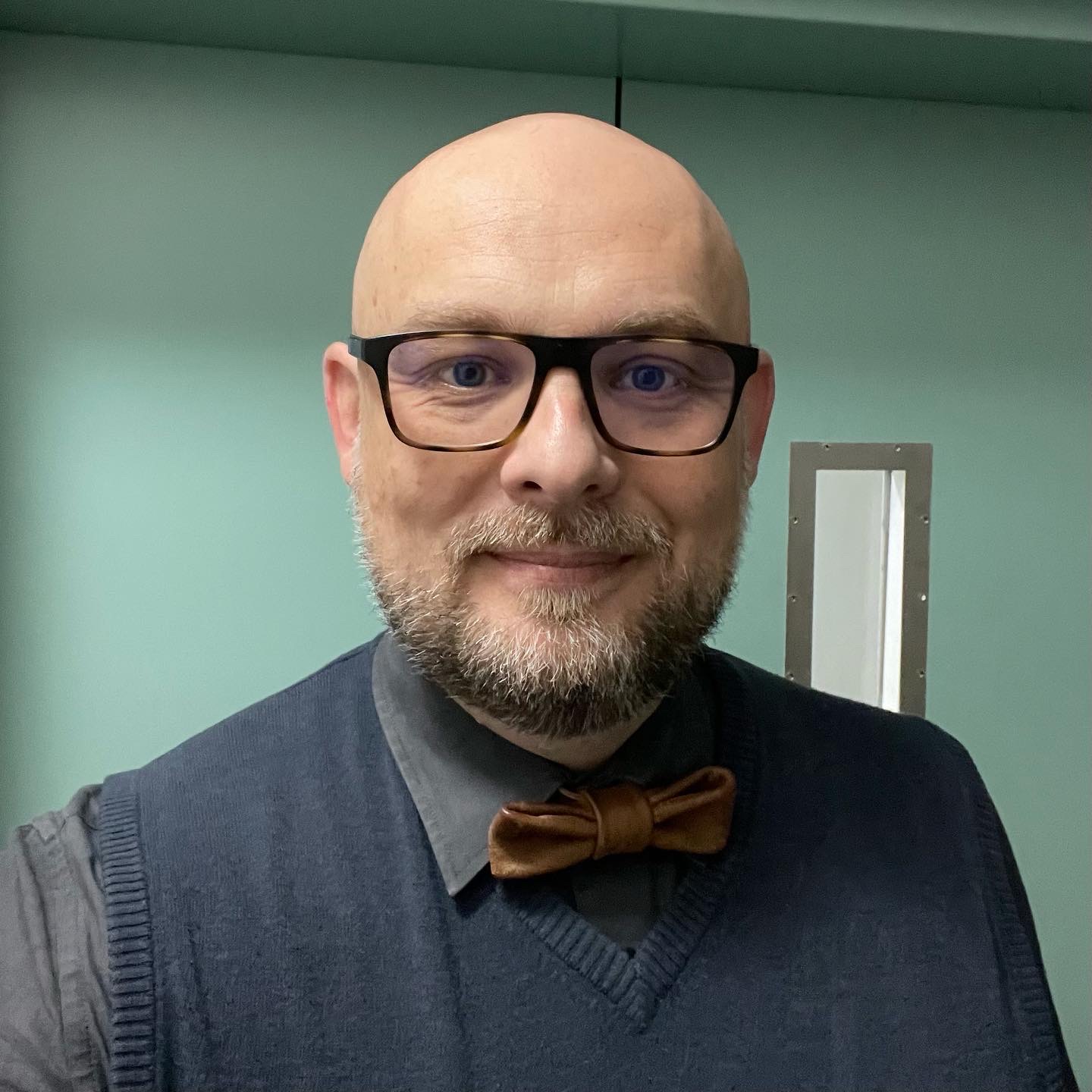
    Pre-Phd proposal defence selfie (2022/05/10)

    But why pick up blogging (again)? The hope is that by keeping an open blog, as writing-and-thinking practice, I will be able to share my passion for learning and development through my own experiences – and with the insights of likeminded people from across the globe. I hope to learn from, and be inspired by fellow travelers, mentors, teachers and other souls passionate about pedagogies of hope.

    I hope to make a difference.