Tag: Knowledge

  • The Knoetze Bloodline


    If anyone wondered where I’d gone to – or why I’ve been relatively quiet lately – check this out! I’ve been researching and building my family tree – and am at a place where I can show the world!!

    *Muwahahahahahaaa*

    Click through to http://theknoetzebloodline.myheritage.com and have a peek. If you happen to fit in there somewhere – drop me a line and I’ll register you as an administrator!!

    All my love,
    Willie

  • How to Learn (But Not Master) Any Language in 1 Hour…

    Click through to the original article on the “4 Hour Work Week” blog and end up discovering a whole new world of ideas :0)

    For those not prone to that level of exploration – here’s a glimpse:
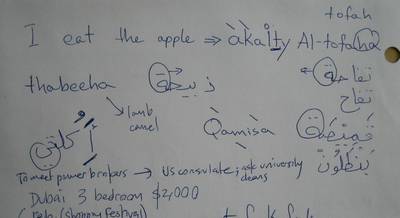
    arabic-script.jpg
    Deconstructing Arabic in 45 Minutes

    deconstructing-russian.jpg
    Conversational Russian in 60 minutes?

    This post is by request. How long does it take to learn Chinese or Japanese vs. Spanish or Irish Gaelic? I would argue less than an hour.

    Here’s the reasoning…

    Before you invest (or waste) hundreds and thousands of hours on a language, you should deconstruct it. During my thesis research at Princeton, which focused on neuroscience and unorthodox acquisition of Japanese by native English speakers, as well as when redesigning curricula for Berlitz, this neglected deconstruction step surfaced as one of the distinguishing habits of the fastest language learners.

    So far, I’ve deconstructed Japanese, Mandarin Chinese, Spanish, Italian, Brazilian Portuguese, German, Norwegian, Irish Gaelic, Korean, and perhaps a dozen others. I’m far from perfect in these languages, and I’m terrible at some, but I can converse in quite a few with no problems whatsoever—just ask the MIT students who came up to me last night and spoke in multiple languages.

    How is it possible to become conversationally fluent in one of these languages in 2-12 months? It starts with deconstructing them, choosing wisely, and abandoning all but a few of them.

    Consider a new language like a new sport.

    There are certain physical prerequisites (height is an advantage in basketball), rules (a runner must touch the bases in baseball), and so on that determine if you can become proficient at all, and—if so—how long it will take.

    Languages are no different. What are your tools, and how do they fit with the rules of your target?

    If you’re a native Japanese speaker, respectively handicapped with a bit more than 20 phonemes in your language, some languages will seem near impossible. Picking a compatible language with similar sounds and word construction (like Spanish) instead of one with a buffet of new sounds you cannot distinguish (like Chinese) could make the difference between having meaningful conversations in 3 months instead of 3 years.

    Let’s look at few of the methods I recently used to deconstructed Russian and Arabic to determine if I could reach fluency within a 3-month target time period. Both were done in an hour or less of conversation with native speakers sitting next to me on airplanes.

    Six Lines of Gold

    Here are a few questions that I apply from the outset. The simple versions come afterwards:

    1. Are there new grammatical structures that will postpone fluency? (look at SOV vs. SVO, as well as noun cases)

    2. Are there new sounds that will double or quadruple time to fluency? (especially vowels)

    3. How similar is it to languages I already understand? What will help and what will interfere? (Will acquisition erase a previous language? Can I borrow structures without fatal interference like Portuguese after Spanish?)

    4. All of which answer: How difficult will it be, and how long would it take to become functionally fluent?

    It doesn’t take much to answer these questions. All you need are a few sentences translated from English into your target language.

    Some of my favorites, with reasons, are below:

    The apple is red.
    It is John’s apple.
    I give John the apple.
    We give him the apple.
    He gives it to John.
    She gives it to him.

    These six sentences alone expose much of the language, and quite a few potential deal killers.

    First, they help me to see if and how verbs are conjugated based on speaker (both according to gender and number). I’m also able to immediately identify an uber-pain in some languages: placement of indirect objects (John), direct objects (the apple), and their respective pronouns (him, it). I would follow these sentences with a few negations (“I don’t give…”) and different tenses to see if these are expressed as separate words (“bu” in Chinese as negation, for example) or verb changes (“-nai” or “-masen” in Japanese), the latter making a language much harder to crack.

    Second, I’m looking at the fundamental sentence structure: is it subject-verb-object (SOV) like English and Chinese (“I eat the apple”), is it subject-object-verb (SOV) like Japanese (“I the apple eat”), or something else? If you’re a native English speaker, SOV will be harder than the familiar SVO, but once you pick one up (Korean grammar is almost identical to Japanese, and German has a lot of verb-at-the-end construction), your brain will be formatted for new SOV languages.

    Third, the first three sentences expose if the language has much-dreaded noun cases. What are noun cases? In German, for example, “the” isn’t so simple. It might be der, das, die, dem, den and more depending on whether “the apple” is an object, indirect object, possessed by someone else, etc. Headaches galore. Russian is even worse. This is one of the reasons I continue to put it off.

    All the above from just 6-10 sentences! Here are two more:

    I must give it to him.
    I want to give it to her.

    These two are to see if auxiliary verbs exist, or if the end of the each verb changes. A good short-cut to independent learner status, when you no longer need a teacher to improve, is to learn conjugations for “helping” verbs like “to want,” “to need,” “to have to,” “should,” etc. In Spanish and many others, this allows you to express yourself with “I need/want/must/should” + the infinite of any verb. Learning the variations of a half dozen verbs gives you access to all verbs. This doesn’t help when someone else is speaking, but it does help get the training wheels off self-expression as quickly as possible.

    If these auxiliaries are expressed as changes in the verb (often the case with Japanese) instead of separate words (Chinese, for example), you are in for a rough time in the beginning.

    Sounds and Scripts

    I ask my impromptu teacher to write down the translations twice: once in the proper native writing system (also called “script” or “orthography”), and again in English phonetics, or I’ll write down approximations or use IPA.

    If possible, I will have them take me through their alphabet, giving me one example word for each consonant and vowel. Look hard for difficult vowels, which will take, in my experience, at least 10 times longer to master than any unfamiliar consonant or combination thereof (”tsu” in Japanese poses few problems, for example). Think Portuguese is just slower Spanish with a few different words? Think again. Spend an hour practicing the “open” vowels of Brazilian Portuguese. I recommend you get some ice for your mouth and throat first.
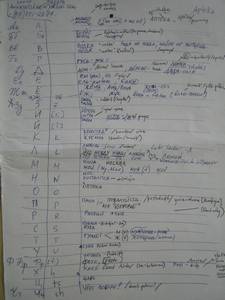
    russian-alphabet.jpg
    The Russian Phonetic Menu, and…

    reading-real-russian.jpg
    Reading Real Cyrillic 20 Minutes Later

    Going through the characters of a language’s writing system is really only practical for languages that have at least one phonetic writing system of 50 or fewer sounds—Spanish, Russian, and Japanese would all be fine. Chinese fails since tones multiply variations of otherwise simple sounds, and it also fails miserably on phonetic systems. If you go after Mandarin, choose the somewhat uncommon GR over pinyin romanization if at all possible. It’s harder to learn at first, but I’ve never met a pinyin learner with tones even half as accurate as a decent GR user. Long story short, this is because tones are indicated by spelling in GR, not by diacritical marks above the syllables.

    In all cases, treat language as sport.

    Learn the rules first, determine if it’s worth the investment of time (will you, at best, become mediocre?), then focus on the training. Picking your target is often more important than your method.

    [To be continued?]

    Blogged with Flock

  • Steve Clayton: Geek In Disguise : Digital Design: AvenueA|RazorFish Report

    If you’re interested in the latest authoritative report on Digital Design – and what your online presence should learn from it – click through Steve Clayton’s blog for the motherload:

    Steve Clayton: Geek In Disguise : Digital Design: AvenueA|RazorFish Report

    Blogged with Flock

  • Yellowcard: "How I Go"

    [youtube https://www.youtube.com/watch?v=foWX08Un4Ew&w=425&h=350]

    YouTube

    If you still haven’t seen Big Fish – now would be a good time to do it. Even if you’re not particularly interested in the intricacies and science of knowledge transferrance through the application of magical realism to narratives – you’ll be enriched by the experience.

    (It is a bloody good movie.)

    technorati tags:

    Blogged with Flock

  • Lengthy, but worth the read

    Here’s another piece I rediscovered. It’s taken from the online journal of Jan Arden:

    Keep Asking
    09-Sep-2005 11:58 am

    How do you learn to love yourself without reservation, without hesitation? How do you truly and honestly learn how to forgive the things you have done, or furthermore, the things that have just “happened” to you? How do you come to terms with your own body and your own thoughts? Time…time…time…a wise healer and a wiser teacher. You cannot know until you face the demons that lurk just under your beating heart. There will always be part of your ego that wants to bring you down; you just have to keep it at bay with your spirit. The spirit is bigger and braver and smarter, it’s just not always as loud. It’s a whisper that takes time and attention to hear. You have to spend time with yourself and not always bask in other’s company.

    How do you learn to just be? I still keep going back, time and time again, to the delicate art of the “thought” – the way in which we communicate essentially, with what and who we are. We are infinite. We are omnipotent. We are here now – and always “were” here. We are all here together trying to finds bits of ourselves among the others we know; that’s why we are always seeking a soul mate, endlessly seeking to retrieve a particle of where we came from. Sometimes I do believe another soul can hold that part and is waiting to give it to back to you.

    I was talking to someone about attraction and the laws in which it seems to work. (Who knows what they are, I don’t know.) Why do we like certain people? What makes us want to be with them, no matter what the outcome, or the conflictions – when we want something so badly that we care not what the consequences may in fact be? Is it chemical, spiritual, circumstantial? Is it Godly? Is it just plain and simply the recognition of seeing them for the first time and recognizing that you “know” them. You know them so intricately, from another time all together. You don’t hesitate, you just walk into them body, mind, lungs and all. When you see someone for that first moment and say to yourself, ahh, there he is…or there she is….or there YOU are. The mystery of who you are reflected in someone’s eyes and when they look at you, you see for a second everything all at once.

    Most of the people that I have met as an adult have those mysterious qualities about them; they have that thing that pulls me in. I feel like I know them and my comfort is instant, my comfort is immediate. There is no reluctance on my part to stay close to them…I want to run toward them. I want to know them and be with them and think about them most of the day. It’s different meeting new people when you’re older; you have a built in “caution” in all that you do. You realize that hurt is shaking hands with anything unfamiliar. You avoid being hurt, so consequently, you miss out on some wonderful souls. You will always risk being hurt as you take on a new friend. You will always risk being let down or being rejected. But risk you must. Once in a great while, things turn out. If you set your thoughts to the task of getting what you want, you most certainly will have things go your way. I have “thought” my way this far and shall continue to do so until I am no longer in this body.

    The body…one’s great foil, one’s certain enemy. With age comes true acceptance. It’s hard being young, it’s hard facing a mirror and not liking who you see. As corny as it sounds, if you tell yourself horrible things, your body will react by giving you horrible images of itself. It can twist itself up into a heap of mutant cells and bone if you let it. Kindness towards one’s self must become a part of your day; a part set aside to just talk to yourself…to say good things, to pick yourself up. Darkness is only the absence of light, the light is there, you just have to really look for it…it will find you. (I tried to be kind…I tired to be good…..I think that was in a song of mine.) It’s harder than anything in this world to do – that’s to be honest with yourself – to actually sit in a chair in the sun and tell yourself the truth. Ask yourself questions that you’re afraid of and you won’t be afraid anymore. Ask yourself what you like, what you want, who you want? Don’t stop asking yourself everything you want to know; it’s a conversation you won’t ever regret having.

    jann

  • Hokku Tanka Haiku Quantums

    Thank you to Tresblue for mentioning the Haiku 😉 Indeed, in our world of small chips and big data – Haiku are probably the perfect examples of condensed information transfer through language. The ultimate microchip!

    Compared to 21st Century man’s obsession with manuals, theses and compilations, one of the first forms of Haiku – the Hokku – had a completely different approach to information transferance. Influenced by Zen philosophy, Bashō could be considered the Father of Hokku.

    Hokku vs Haiku? Compare this 17th Century Hokku by Bashō:

    Old pond
    Frog jumps in
    Sound of water.

    To the more modern Haiku by Masaoka Shiki, the Revisionist who brought Hokku to it’s knees in the late 19th Century:

    Looking through
    Three thousand haiku
    On two persimmons.

    A snake falls
    From the high stone wall:
    Fierce autumn gale.

    He washes his horse
    With the setting sun
    In the autumn sea.

    Again and again
    From my sickbed I ask,
    ‘How deep is the snow?’

    Soon to die,
    Yet noisier than ever:
    The autumn cicada.

    Snake-gourd in bloom:
    On his way to death,
    A man chocked with phlegm.

    A crimson berry
    Splattering down on
    The frost-white garden.

    As the bat flies,
    Its sound is dark
    Through the grove of trees.

    I want to sleep:
    Go gently, won’t you,
    When you swat the flies.

    So few the cicadas
    This morning after
    The autumn storm.

    Nothing of Bashō’s Hokku remains in the Haiku – except for the seventeen syllable form. Masaoka Shiki paints a more elaborate and esoteric scene. Here one is taken on a 10 verse journey from where one progresses from reader (first verse), to spectator, to participant and finaly to sole survivor. Through this approach, we are emotionaly involved – above and beyond the impassive observation allowed by Bashō.

    Funny how this shift from Bashō to Shiki reflects the shift in our societies. Where once we were able to learn all we needed to know in three lines – we now have more information than we as a species can cope with. We need more and more combinations of verse to understand the world within and around us.

    Problem is: the production and discovery of new combinations of verse grows exponentialy to our ability to learn – which, in turn, is fueled by our need to understand.

    Perhaps Solomon was on to something when he likened the quest for knowledge to chasing the wind.

    What if everything is encapsulated in the origional Verse?
    Three lines (in English – in the origional Japanese, everything is written in one line) that hold the answer to everything.

    Sounds a bit like string theory, doesn’t it? However, if we were to move towards the string theory that is the Verse – what would happen to emotional involvement?

    Aum