Author: absolutwillie

  • Protected: Weeklikse Vraag 4

    This content is password-protected. To view it, please enter the password below.

  • Reblog – Urgent anti-bully message to educators: Do more to stop it

    Urgent anti-bully message to educators: Do more to stop it is a cross-blog from Annie Fox’s Blog

    Annie Fox, M.Ed., is an internationally respected parenting expert, 

    award-winning author, and a trusted online adviser for tweens teens.

    (via @TeachersApps) 

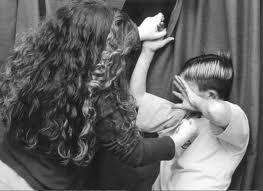
    They say schools are no longer in the business of teaching good citizenship, character, ethics or whatever you want to call it because educators are too busy “teaching to the test.” There’s no test for character that can be graded to give districts bragging rights for getting their scores up, so why teach this stuff? Because there actually is a test for character. It’s called Life and we ought to be teaching to it. When we don’t, we get this…
    Hey Terra,
    People at school don’t like me because me and this popular girl got into a little fight and I won. To get even she spread rumours about me saying I was in a mental institution for weird and violent behavior (a complete lie). Then everyone started to insult and ignore me. She does it the most. They say stuff like “Hey freak! No one likes you, so why dont you take a long walk off a short bridge?” Everyday. I don’t get a break from it. I insult them back. I know I probably shouldn’t bother, but it’s really hard not to. It’s like automatic for me now. I don’ t like being told to basically die. It’s not right for anyone to be told that.
    So Fed Up
    See it. Name it. Stop it.
    Dear Fed Up,
    These kids are being rude and cruel. I know it’s hard to hear this crap and try to brush it off. I’ve heard it said that no one can bring you down without your permission. That’s kinda true and kinda not. Humans are wired to be emotional. We’re also wired to want other people to like us. So when someone shouts angry words in your face or online, your human wiring kicks in. Your heart beats faster (and not in a good way) and you feel attacked. Even if the person isn’t someone you know or care about. Even if what he or she says is a lie. Words hurt. We feel it. So I totally understand the temptation to attack back. Except… it doesn’t help. You’ve seen that. It just makes things worse. Like throwing gasoline on a fire. That won’t put it out.
    But you need to learn to take care of yourself. That doesn’t mean yelling nasty stuff back at people who are mean to you. You need to take care of yourself by figuring out how to response so that
    a) you don’t give anyone permission to push your buttons so you automatically react like a puppet and
    b) at least one adult at school and/or at home steps in and gets to the bottom of this so that this girl and her followers no longer feel they’ve got the right to talk to you or anyone in this way.
    I just took my fingers off the keyboard for a minute.  I’m taking a deep breath now, because hearing about this stuff every day really upsets me. I feel frustrated there are kids who believe it’s OK to be mean to other kids. I also feel frustrated that the adults who run schools (principals, counselors, teachers, coaches) have not done a better job making school a safer more accepting place for all students all the time.
    Still breathing. It helps. Take some deep breaths on your own whenever you need to calm down. Then think about what would really make this situation better. Forget about trying to talk to the girl. Go to adults in power. Talk to your parents. Tell them what you told me. Tell them just how Fed Up you are. Talk to the principal (with or without your parents). Talk to the school counselor. This has to stop. Adults can make it stop. Remind them it’s their job.
    Take care.
    In friendship,
    Terra
    ————–
    I’m so sick of the situations that prompt these emails. Where are the adults in charge? Do they really not know what’s going on? Do they believe it’s not part of their “job” to get involved with fights between students? Do they worry they’ll get no support from their administrators if they step in? Do they worry they’ll get  in trouble with parents for calling out kids who are disrepecting other kids? Or have they just given up, believing that peer harassment is a problem bigger than any remedy they might offer in the moment?
    I don’t know what school administrators and teachers think about the bullying that persists in their schools. Why don’t you tell me? I’m listening.
  • Protected: Weekly Question 3

    This content is password-protected. To view it, please enter the password below.

  • [Bookmark] Dewey’s Pedagogic Creed, Article V: The School and Social Progress

    My Pedagogic Creed 
    by John Dewey


    John Dewey’s famous declaration concerning education. First published in The School Journal, Volume LIV, Number 3 (January 16, 1897), pages 77-80.


    ARTICLE V-The School and Social Progress 

    I believe that education is the fundamental method of social progress and reform. I believe that all reforms which rest simply upon the enactment of law, or the threatening of certain penalties, or upon changes in mechanical or outward arrangements, are transitory and futile.

    I believe that education is a regulation of the process of coming to share in the social consciousness; and that the adjustment of individual activity on the basis of this social consciousness is the only sure method of social reconstruction.

    I believe that this conception has due regard for both the individualistic and socialistic ideals. It is duly individual because it recognizes the formation of a certain character as the only genuine basis of right living. It is socialistic because it recognizes that this right character is not to be formed by merely individual precept, example, or exhortation, but rather by the influence of a certain form of institutional or community life upon the individual, and that the social organism through the school, as its organ, may determine ethical results.

    I believe that in the ideal school we have the reconciliation of the individualistic and the institutional ideals.

    I believe that the community’s duty to education is, therefore, its paramount moral duty. By law and punishment, by social agitation and discussion, society can regulate and form itself in a more or less haphazard and chance way. But through education society can formulate its own purposes, can organize its own means and resources, and thus shape itself with definiteness and economy in the direction in which it wishes to move. I believe that when society once recognizes the possibilities in this direction, and the obligations which these possibilities impose, it is impossible to conceive of the resources of time, attention, and money which will be put at the disposal of the educator. I believe that it is the business of every one interested in education to insist upon the school as the primary and most effective interest of social progress and reform in order that society may be awakened to realize what the school stands for, and aroused to the necessity of endowing the educator with sufficient equipment properly to perform his task.

    I believe that education thus conceived marks the most perfect and intimate union of science and art conceivable in human experience.

    I believe that the art of thus giving shape to human powers and adapting them to social service, is the supreme art; one calling into its service the best of artists; that no insight, sympathy, tact, executive power, is too great for such service.

    I believe that with the growth of psychological service, giving added insight into individual structure and laws of growth; and with growth of social science, adding to our knowledge of the right organization of individuals, all scientific resources can be utilized for the purposes of education.

    I believe that when science and art thus join hands the most commanding motive for human action will be reached; the most genuine springs of human conduct aroused and the best service that human nature is capable of guaranteed.

    I believe, finally, that the teacher is engaged, not simply in the training of individuals, but in the formation of the proper social life.

    I believe that every teacher should realize the dignity of his calling; that he is a social servant set apart for the maintenance of proper social order and the securing of the right social growth.

    I believe that in this way the teacher always is the prophet of the true God and the usherer in of the true kingdom of God.

    ____________________
    This piece has been reproduced here on the understanding that it is not subject to any copyright restrictions, and that it is, and will remain, in the public domain.

    Source: http://www.infed.org/archives/e-texts/e-dew-pc.htm 

    (via http://playpen.meraka.csir.co.za/~acdc/education/Dr_Anvind_Gupa/Learners_Library_7_March_2007/Resources/books/readings/17.pdf)

  • [Bookmark] Dewey’s Pedagogic Creed, Article IV: The Nature of Method

    My Pedagogic Creed 
    by John Dewey


    John Dewey’s famous declaration concerning education. First published in The School Journal, Volume LIV, Number 3 (January 16, 1897), pages 77-80.


    ARTICLE IV–The Nature of Method 

    I believe that the question of method is ultimately reducible to the question of the order of development of the child’s powers and interests. The law for presenting and treating material is the law implicit within the child’s own nature. Because this is so I believe the following statements are of supreme importance as determining the spirit in which education is carried on:

    1. I believe that the active side precedes the passive in the development of the child nature; that expression comes before conscious impression; that the muscular development precedes the sensory; that movements come before conscious sensations; I believe that consciousness is essentially motor or impulsive; that conscious states tend to project themselves in action.

    I believe that the neglect of this principle is the cause of a large part of the waste of time and strength in school work. The child is thrown into a passive, receptive, or absorbing attitude. The conditions are such that he is not permitted to follow the law of his nature; the result is friction and waste.

    I believe that ideas (intellectual and rational processes) also result from action and devolve for the sake of the better control of action. What we term reason is primarily the law of orderly or effective action. To attempt to develop the reasoning powers, the powers of judgment, without reference to the selection and arrangement of means in action, is the fundamental fallacy in our present methods of dealing with this matter. As a result we present the child with arbitrary symbols. Symbols are a necessity in mental development, but they have their place as tools for economizing effort; presented by themselves they are a mass of meaningless and arbitrary ideas imposed from without.

    2. I believe that the image is the great instrument of instruction. What a child gets out of any subject presented to him is simply the images which he himself forms with regard to it.

    I believe that if nine tenths of the energy at present directed towards making the child learn certain things, were spent in seeing to it that the child was forming proper images, the work of instruction would be indefinitely facilitated.

    I believe that much of the time and attention now given to the preparation and presentation of lessons might be more wisely and profitably expended in training the child’s power of imagery and in seeing to it that he was continually forming definite, vivid, and growing images of the various subjects with which he comes in contact in his experience.

    3. I believe that interests are the signs and symptoms of growing power. I believe that they represent dawning capacities. Accordingly the constant and careful observation of interests is of the utmost importance for the educator.

    I believe that these interests are to be observed as showing the state of development which the child has reached.

    I believe that they prophesy the stage upon which he is about to enter.

    I believe that only through the continual and sympathetic observation of childhood’s interests can the adult enter into the child’s life and see what it is ready for, and upon what material it could work most readily and fruitfully.

    I believe that these interests are neither to be humored nor repressed. To repress interest is to substitute the adult for the child, and so to weaken intellectual curiosity and alertness, to suppress initiative, and to deaden interest. To humor the interests is to substitute the transient for the permanent. The interest is always the sign of some power below; the important thing is to discover this power. To humor the interest is to fail to penetrate below the surface and its sure result is to substitute caprice and whim for genuine interest.

    4. I believe that the emotions are the reflex of actions.

    I believe that to endeavor to stimulate or arouse the emotions apart from their corresponding activities, is to introduce an unhealthy and morbid state of mind. I believe that if we can only secure right habits of action and thought, with reference to the good, the true, and the beautiful, the emotions will for the most part take care of themselves.

    I believe that next to deadness and dullness, formalism and routine, our education is threatened with no greater evil than sentimentalism.

    I believe that this sentimentalism is the necessary result of the attempt to divorce feeling from action.

    ____________________
    This piece has been reproduced here on the understanding that it is not subject to any copyright restrictions, and that it is, and will remain, in the public domain.

    Source: http://www.infed.org/archives/e-texts/e-dew-pc.htm 

    (via http://playpen.meraka.csir.co.za/~acdc/education/Dr_Anvind_Gupa/Learners_Library_7_March_2007/Resources/books/readings/17.pdf)

  • [Bookmark] Dewey’s Pedagogic Creed, Article III: The Subject-Matter of Education

    My Pedagogic Creed 
    by John Dewey


    John Dewey’s famous declaration concerning education. First published in The School Journal, Volume LIV, Number 3 (January 16, 1897), pages 77-80.


    ARTICLE III–The Subject-Matter of Education 

    I believe that the social life of the child is the basis of concentration, or correlation, in all his training or growth. The social life gives the unconscious unity and the background of all his efforts and of all his attainments.

    I believe that the subject-matter of the school curriculum should mark a gradual differentiation out of the primitive unconscious unity of social life.

    I believe that we violate the child’s nature and render difficult the best ethical results, by introducing the child too abruptly to a number of special studies, of reading, writing, geography, etc., out of relation to this social life.

    I believe, therefore, that the true center of correlation on the school subjects is not science, nor literature, nor history, nor geography, but the child’s own social activities. I believe that education cannot be unified in the study of science, or so called nature study, because apart from human activity, nature itself is not a unity; nature in itself is a number of diverse objects in space and time, and to attempt to make it the center of work by itself, is to introduce a principle of radiation rather than one of concentration.

    I believe that literature is the reflex expression and interpretation of social experience; that hence it must follow upon and not precede such experience. It, therefore, cannot be made the basis, although it may be made the summary of unification.

    I believe once more that history is of educative value in so far as it presents phases of social life and growth. It must be controlled by reference to social life. When taken simply as history it is thrown into the distant past and becomes dead and inert. Taken as the record of man’s social life and progress it becomes full of meaning. I believe, however, that it cannot be so taken excepting as the child is also introduced directly into social life.

    I believe accordingly that the primary basis of education is in the child’s powers at work along the same general constructive lines as those which have brought civilization into being.

    I believe that the only way to make the child conscious of his social heritage is to enable him to perform those fundamental types of activity which make civilization what it is. I believe, therefore, in the so-called expressive or constructive activities as the center of correlation.

    I believe that this gives the standard for the place of cooking, sewing, manual training, etc., in the school.

    I believe that they are not special studies which are to be introduced over and above a lot of others in the way of relaxation or relief, or as additional accomplishments. I believe rather that they represent, as types, fundamental forms of social activity; and that it is possible and desirable that the child’s introduction into the more formal subjects of the curriculum be through the medium of these activities.

    I believe that the study of science is educational in so far as it brings out the materials and processes which make social life what it is.

    I believe that one of the greatest difficulties in the present teaching of science is that the material is presented in purely objective form, or is treated as a new peculiar kind of experience which the child can add to that which he has already had. In reality, science is of value because it gives the ability to interpret and control the experience already had. It should be introduced, not as so much new subject-matter, but as showing the factors already involved in previous experience and as furnishing tools by which that experience can be more easily and effectively regulated.

    I believe that at present we lose much of the value of literature and language studies because of our elimination of the social element. Language is almost always treated in the books of pedagogy simply as the expression of thought. It is true that language is a logical instrument, but it is fundamentally and primarily a social instrument. Language is the device for communication; it is the tool through which one individual comes to share the ideas and feelings of others. When treated simply as a way of getting individual information, or as a means of showing off what one has learned, it loses its social motive and end.

    I believe that there is, therefore, no succession of studies in the ideal school curriculum. If education is life, all life has, from the outset, a scientific aspect, an aspect of art and culture, and an aspect of communication. It cannot, therefore, be true that the proper studies for one grade are mere reading and writing, and that at a later grade, reading, or literature, or science, may be introduced. The progress is not in the succession of studies but in the development of new attitudes towards, and new interests in, experience. I believe finally, that education must be conceived as a continuing reconstruction of experience; that the process and the goal of education are one and the same thing. I believe that to set up any end outside of education, as furnishing its goal and standard, is to deprive the educational process of much of its meaning and tends to make us rely upon false and external stimuli in dealing with the child.

    ____________________
    This piece has been reproduced here on the understanding that it is not subject to any copyright restrictions, and that it is, and will remain, in the public domain.

    Source: http://www.infed.org/archives/e-texts/e-dew-pc.htm 

    (via http://playpen.meraka.csir.co.za/~acdc/education/Dr_Anvind_Gupa/Learners_Library_7_March_2007/Resources/books/readings/17.pdf)

  • Protected: Weeklikse Vraag 2

    This content is password-protected. To view it, please enter the password below.

  • [Bookmark] Dewey’s Pedagogic Creed, Article II: What the School Is

    My Pedagogic Creed 
    by John Dewey

    John Dewey’s famous declaration concerning education. First published in The School Journal, Volume LIV, Number 3 (January 16, 1897), pages 77-80.


    ARTICLE II–What the School Is 

    I believe that the school is primarily a social institution. Education being a social process, the school is simply that form of community life in which all those agencies areconcentrated that will be most effective in bringing the child to share in the inherited resources of the race, and to use his own powers for social ends.

    I believe that education, therefore, is a process of living and not a preparation for future living.

    I believe that the school must represent present life-life as real and vital to the child as that which he carries on in the home, in the neighborhood, or on the playground. I believe that education which does not occur through forms of life, or that are worth living for their own sake, is always a poor substitute for the genuine reality and tends to cramp and to deaden.

    I believe that the school, as an institution, should simplify existing social life; should reduce it, as it were, to an embryonic form. Existing life is so complex that the child cannot be brought into contact with it without either confusion or distraction; he is either overwhelmed by the multiplicity of activities which are going on, so that he loses his own power of orderly reaction, or he is so stimulated by these various activities that his powers are prematurely called into play and he becomes either unduly specialized or else disintegrated.

    I believe that as such simplified social life, the school life should grow gradually out of the home life; that it should take up and continue the activities with which the child is already familiar in the home.

    I believe that it should exhibit these activities to the child, and reproduce them in such ways that the child will gradually learn the meaning of them, and be capable of playing his own part in relation to them.

    I believe that this is a psychological necessity, because it is the only way of securing continuity in the child’s growth, the only way of giving a back-ground of past experience to the new ideas given in school.

    I believe that it is also a social necessity because the home is the form of social life in which the child has been nurtured and in connection with which he has had his moral training. It is the business of the school to deepen and extend his sense of the values bound up in his home life.

    I believe that much of present education fails because it neglects this fundamental principle of the school as a form of community life. It conceives the school as a place where certain information is to be given, where certain lessons are to be ]earned, or where certain habits are to be formed. The value of these is conceived as lying largely in the remote future; the child must do these things for the sake of something else he is to do; they are mere preparation. As a result they do not become a part of the life experience of the child and so are not truly educative.

    I believe that the moral education centers upon this conception of the school as a mode of social life, that the best and deepest moral training is precisely that which one gets through having to enter into proper relations with others in a unity of work and thought. The present educational systems, so far as they destroy or neglect this unity, render it difficult or impossible to get any genuine, regular moral training.

    I believe that the child should be stimulated and controlled in his work through the life of the community.

    I believe that under existing conditions far too much of the stimulus and control proceeds from the teacher, because of neglect of the idea of the school as a form of social life. I believe that the teacher’s place and work in the school is to be interpreted from this same basis. The teacher is not in the school to impose certain ideas or to form certain habits in the child, but is there as a member of the community to select the influences which shall affect the child and to assist him in properly responding to these influences. I believe that the discipline of the school should proceed from the life of the school as a whole and not directly from the teacher.

    I believe that the teacher’s business is simply to determine on the basis of larger experience and riper wisdom, how the discipline of life shall come to the child. I believe that all questions of the grading of the child and his promotion should be determined by reference to the same standard. Examinations are of use only so far as they test the child’s fitness for social life and reveal the place in which he can be of the most service and where he can receive the most help.

    ____________________
    This piece has been reproduced here on the understanding that it is not subject to any copyright restrictions, and that it is, and will remain, in the public domain.

    Source: http://www.infed.org/archives/e-texts/e-dew-pc.htm 

    (via http://playpen.meraka.csir.co.za/~acdc/education/Dr_Anvind_Gupa/Learners_Library_7_March_2007/Resources/books/readings/17.pdf)

  • Weekly Question 1

    Wat is Digitale Pedagogie?  What is Digital Pedagogy?


    HowTo:

    1. Post title = Question of the Week / Weeklikse Vraag
    2. Post body = U antwoord / Your answer.
    3. Labels = task number (e.g. task1 for Question 1; task2 vir Vraag 2…)

    [soundcloud url=”https://api.soundcloud.com/tracks/192046602″ params=”color=ff5500&auto_play=false&hide_related=false&show_comments=true&show_user=true&show_reposts=false” width=”100%” height=”166″ iframe=”true” /]

  • [Teaching] Starting a Journey of Digital Pedagogy

    education either functions as an instrument which is used to facilitate integration of the younger generation into the logic of the present system and bring about conformity or it becomes the practice of freedom, the means by which men and women deal critically and creatively with reality and discover how to participate in the transformation of their world”      Paulo Freire

    Experimenting with education, live, is one of the scariest, most exciting and crazily exhilarating rides I’ve thrown myself into. Incredibly scary when you consider that I’ve taken just under 200 teaching students into the deep end with me. Wildly exciting when you realise that we are running where others fear to tread – and doing so while looking everywhere at once. Add to that the insane exhilaration of flipping your university classroom for the first time, and you’ve got one heck of a rush.

    This blog forms part of the class experiment. I hope that it will become one of the main supporting structures of our multimodal class…-room space. The collaborative hub of it all, if you will.

    One way to find out!
     Let’s go!